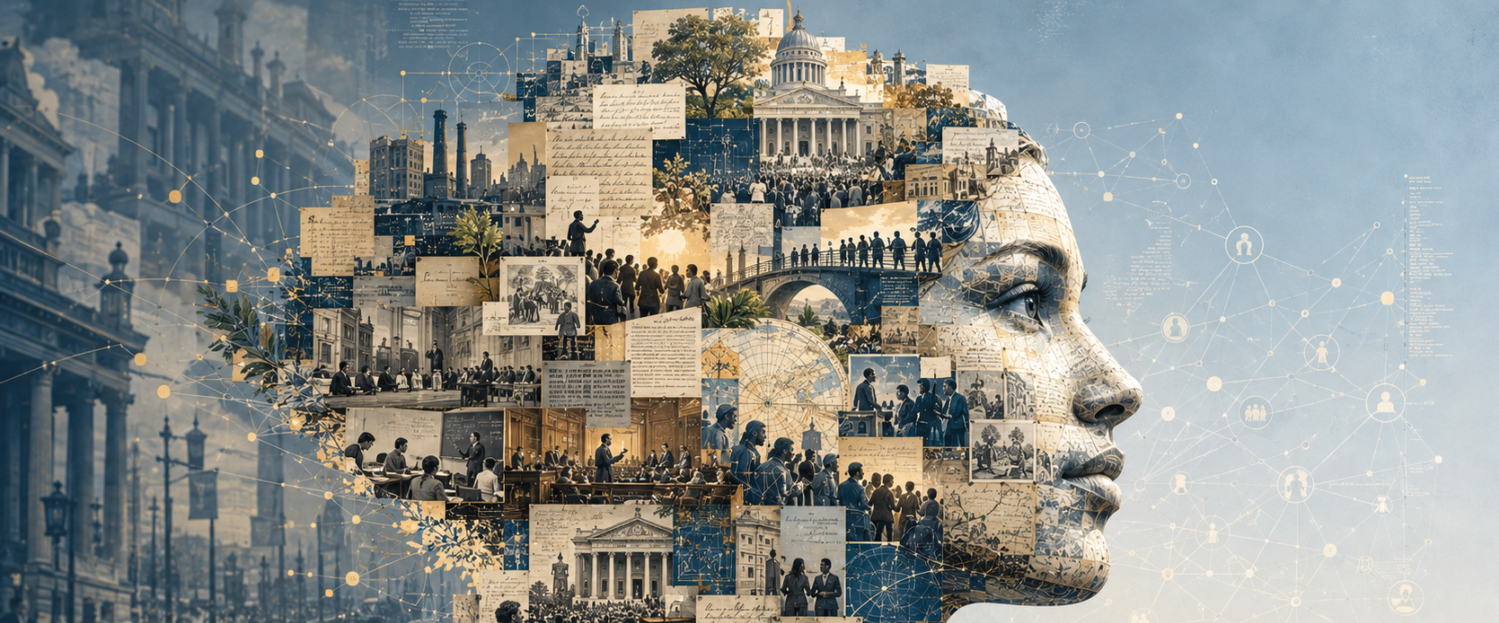
The continuous process through which civilisation elements are formed, transmitted, internalised, maintained, interpreted, modified, strengthened, weakened or rejected, and through which personal and circle civilisations arise, continue and change.
- Explanation. Civilising is not synonymous with moral improvement. The process is substantively neutral: it may promote freedom, cooperation and restraint, but may also normalise obedience, exclusion, enemy images or oppression. Civilising begins in upbringing, is later extended through substantive formation and social participation, and remains operative throughout life. Trust in persons and institutions strongly influences which ideas are adopted and internalised.
Occurs in Propositions
- Proposition 002 – Personal civilisation is learned
- Proposition 003 – Lifelong formation and change
- Proposition 011 – Earliest sources of civilising
- Proposition 012 – Expanding sources of civilising
- Proposition 013 – Increasing source selection
- Proposition 016 – Trust and source acceptance
- Proposition 074 – Legitimation civilises the support base
- Proposition 087 – Civilising function of movements
- Proposition 090 – Internal institutionalisation
- Proposition 091 – Civilising beyond the movement
- Proposition 092 – The state as social circle
- Proposition 094 – Legitimation of state coercion
- Proposition 099 – Common mechanisms of social change
Last updated: 3 October 2026